
Physiotherapy for Scoliosis — What It Is and How It Can Help Scoliosis is a condition where the spine curves sideways rather than running straight. It affects people of all ages, from adolescents going through growth spurts to older adults experiencing age-related spinal changes. For many people living with scoliosis, physiotherapy plays an important role …
Physiotherapy for Scoliosis — What It Is and How It Can Help
Scoliosis is a condition where the spine curves sideways rather than running straight. It affects people of all ages, from adolescents going through growth spurts to older adults experiencing age-related spinal changes. For many people living with scoliosis, physiotherapy plays an important role in managing symptoms, improving posture, and maintaining quality of life — particularly when treatment is delivered consistently and tailored to the individual.
This post explains what physiotherapy for scoliosis involves, who it is appropriate for, and what you can realistically expect from treatment.
What Is Scoliosis?
Scoliosis is defined as a lateral curvature of the spine measuring 10 degrees or more, assessed using a measurement called the Cobb angle. The curve can occur in the thoracic spine (mid back), lumbar spine (lower back), or both. In some cases the spine also rotates, which can cause visible changes to posture such as uneven shoulders, a prominent shoulder blade, or one hip sitting higher than the other.
Scoliosis is generally classified by severity. Mild scoliosis involves a curve under 25 degrees, moderate scoliosis falls between 25 and 45 degrees, and severe scoliosis is anything beyond 45 degrees. The appropriate treatment approach depends significantly on which category applies and whether the curve is still progressing.
Can Physiotherapy Help Scoliosis?
Yes, physiotherapy can be effective for scoliosis, particularly for mild to moderate curves. It is important to understand that physiotherapy is unlikely to straighten the spine structurally, but it can meaningfully reduce pain, slow curve progression, improve muscle balance, and help people function better day to day.
General exercise alone has limited impact on scoliosis. The approaches that have the strongest evidence base are scoliosis-specific exercise programs designed around the individual’s curve pattern. The most widely studied of these is the Schroth Method, which uses breathing, posture correction, and specific exercises to work against the direction of the curve and strengthen the muscles that support better spinal alignment.
What Does Physiotherapy for Scoliosis Involve?
A physiotherapy program for scoliosis typically begins with a thorough assessment. Your physiotherapist will review any scans or X-rays you have, assess your posture, measure your range of movement, and identify which muscles are overworking and which are underactive as a result of the spinal curve.
From there, treatment usually includes a combination of the following.
Scoliosis-specific exercises target the muscles on either side of the spine to address the imbalance created by the curve. These are not generic core exercises — they are designed around the specific pattern of your curve.
Postural retraining helps you become more aware of how you hold your body in everyday positions such as sitting, standing, and walking. Small changes to habitual posture can reduce load on the spine over time.
Breathing techniques are particularly relevant in thoracic scoliosis where the rib cage is affected. Specific breathing patterns can help open the compressed side of the chest and improve overall movement.
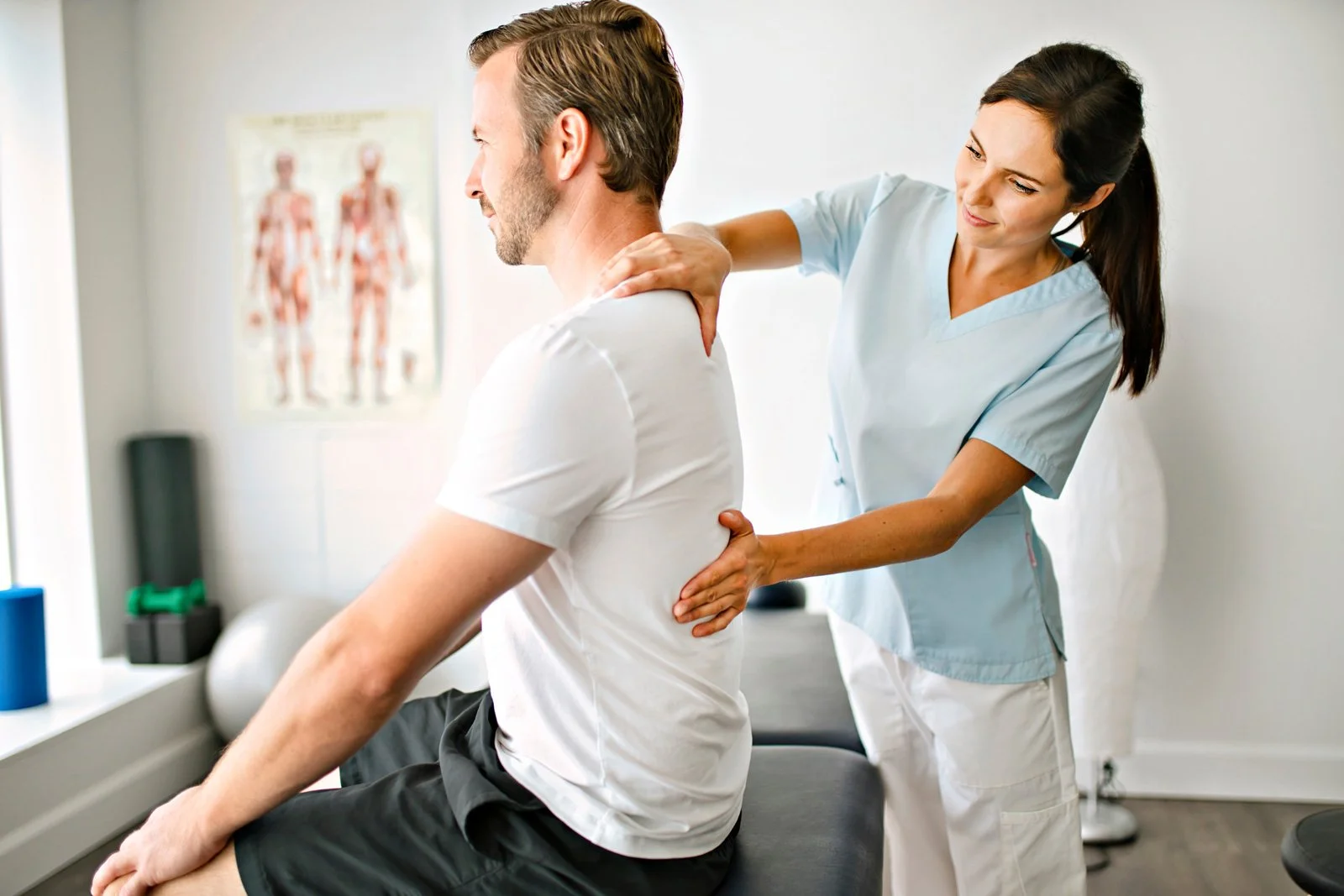
Manual therapy including joint mobilisation and soft tissue treatment can help reduce pain and muscle tightness associated with scoliosis, though this is usually used alongside exercise rather than as a standalone treatment.
Who Is Physiotherapy Most Appropriate For?
Physiotherapy is most appropriate for people with mild to moderate scoliosis, particularly those who are experiencing pain, stiffness, or functional limitations. It is also commonly used as part of a broader management plan for people with more significant curves, including those who have had spinal surgery, where the focus shifts to recovery and maintaining function rather than curve correction.
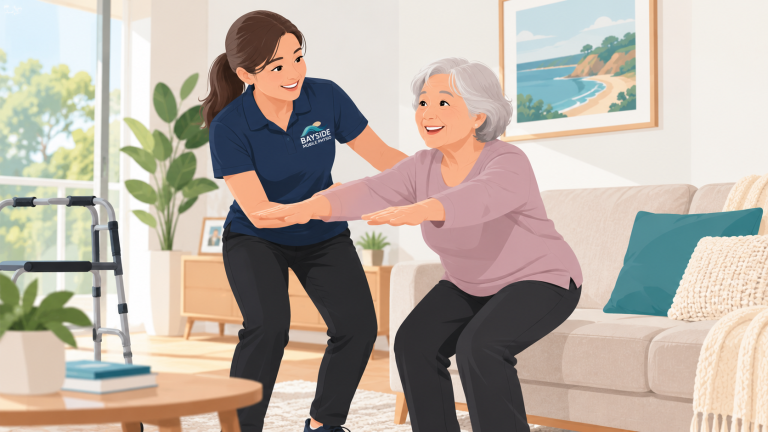
For older adults, scoliosis that develops or worsens with age — sometimes called degenerative or adult scoliosis — can cause significant pain and difficulty with walking, balance, and everyday activities. In-home physiotherapy can be particularly valuable for this group, as it removes the need to travel to a clinic and allows treatment to take place in the environment where function matters most.
Can In-Home Physiotherapy Work for Scoliosis?
Yes. In-home physiotherapy is well suited to scoliosis management, particularly for older adults or anyone with limited mobility. A physiotherapist visiting you at home can assess how you move within your own space, identify any environmental factors contributing to pain or poor posture, and deliver a program that is practical for your daily life.
At Bayside Mobile Physio, we provide in-home physiotherapy across Greater Sydney for people living with scoliosis and related spinal conditions. Our physiotherapists assess each client individually and develop a treatment plan focused on your goals, whether that is reducing pain, improving your ability to walk and move independently, or building the strength and confidence to stay active.
How Many Sessions Will I Need?
This varies depending on the severity of your scoliosis, your goals, and how your body responds to treatment. Most people benefit from an initial block of sessions to establish a home exercise program and begin seeing improvements, followed by periodic review sessions to monitor progress and progress the program.
Your physiotherapist will give you a clear treatment plan after your initial assessment, including recommended frequency, number of sessions, and what to expect along the way.
How Is Physiotherapy for Scoliosis Funded?
There are several funding options available in Australia depending on your circumstances.
Medicare covers up to five allied health sessions per year under a Chronic Disease Management plan if your GP determines your scoliosis qualifies. Your GP can provide a referral and complete the necessary paperwork.
Private health insurance with extras cover typically includes physiotherapy. Check your policy for annual limits and whether a referral is required.
NDIS may fund physiotherapy under the Improved Daily Living category if your scoliosis significantly affects your daily functioning and you meet eligibility criteria.
DVA covers physiotherapy for eligible veterans without a referral in most cases.
If you are unsure which funding option applies to you, we are happy to help you work through it before your first appointment.
Getting Started with Scoliosis Physiotherapy in Sydney
If you or a family member is living with scoliosis and would benefit from in-home physiotherapy, Bayside Mobile Physio services the Inner West, Western Sydney, South West Sydney, Macarthur, and Greater Penrith regions.
To enquire or book an initial assessment, call us on 0468 079 075 or submit a referral through our website. We aim to have new clients seen within 48 hours.
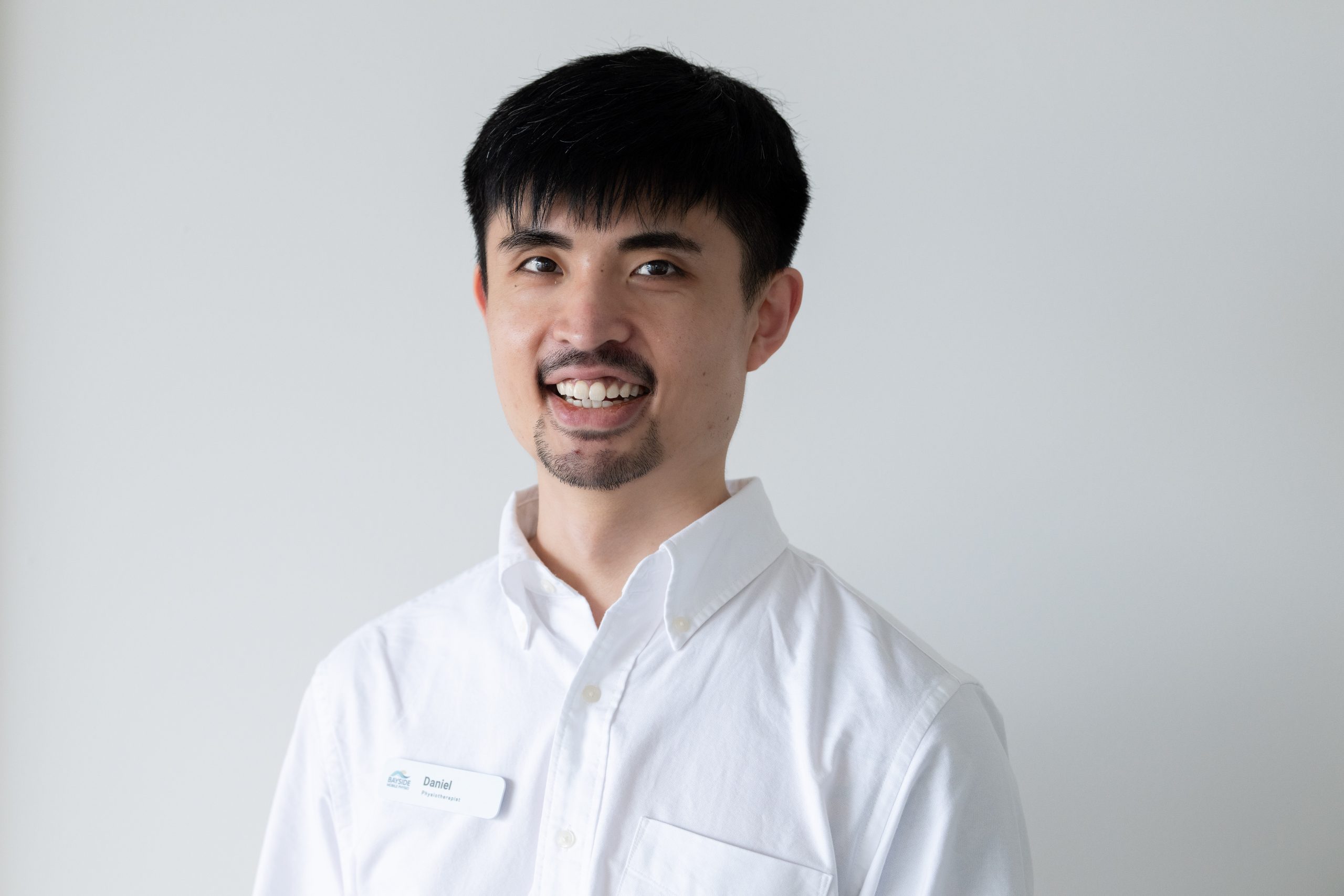
Daniel Chong, BPhty (Australian Catholic University), is an AHPRA-registered physiotherapist and the founder of Bayside Mobile Physio.