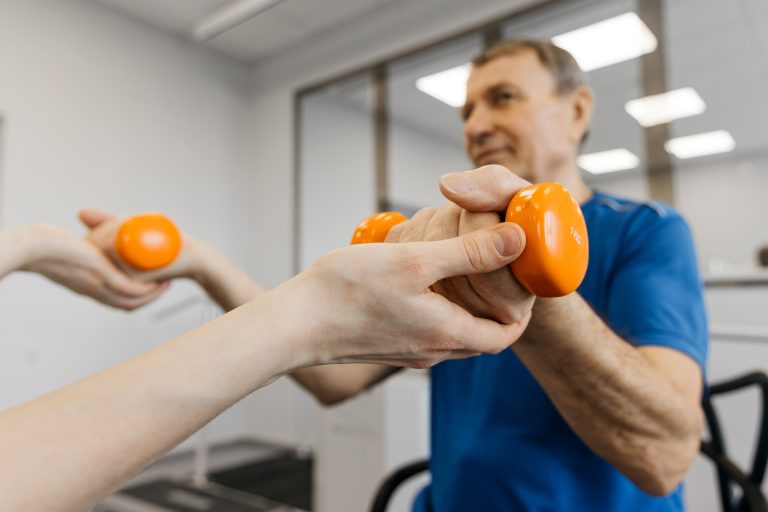

Osteoporosis Exercises at Home: What's Safe and What to Avoid Osteoporosis is one of the most common conditions affecting older Australians, particularly women over 65. It causes bones to become thinner and more fragile, increasing the risk of fractures — even from minor falls or everyday movements. One of the most common questions we hear …

Osteoporosis Exercises at Home: What’s Safe and What to Avoid
Osteoporosis is one of the most common conditions affecting older Australians, particularly women over 65. It causes bones to become thinner and more fragile, increasing the risk of fractures — even from minor falls or everyday movements.
One of the most common questions we hear from clients and their families is: is it safe to exercise with osteoporosis? The short answer is yes — in fact, exercise is one of the most effective ways to manage the condition. But not all exercises are appropriate, and doing the wrong ones can increase fracture risk rather than reduce it.
This article explains what types of exercise are safe and beneficial for people with osteoporosis, what to avoid, and how a physiotherapist can help you exercise confidently at home.
Why Exercise Matters for Osteoporosis
Exercise plays an important role in managing osteoporosis for two reasons. First, weight-bearing and resistance exercise helps stimulate bone density, slowing the rate of bone loss over time. Second, exercise that improves strength and balance directly reduces the risk of falls — which is the primary cause of fractures in people with osteoporosis.
Avoiding exercise out of fear of injury is understandable, but inactivity actually worsens outcomes. It leads to muscle weakness, reduced balance, and greater fall risk — the opposite of what’s needed.
What Types of Exercise Are Safe for Osteoporosis at Home?
The following types of exercise are generally safe and beneficial for people with osteoporosis, though the right program for each person depends on their individual bone density, fitness level, and any other health conditions.
Weight-Bearing Exercises
Weight-bearing exercises are those done on your feet, where your bones and muscles work against gravity. These are among the most effective exercises for maintaining bone density. Safe examples for osteoporosis at home include:
- Walking — even short distances daily makes a difference
- Standing heel raises — rising up onto your toes while holding a bench or chair for support
- Marching on the spot
- Step exercises using a low step with support
Resistance and Strength Training
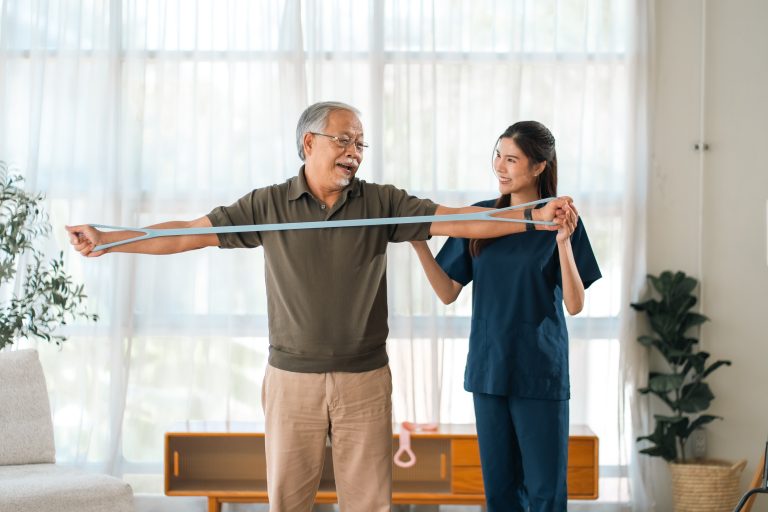
Building muscle strength helps protect bones and improves overall stability. Resistance exercises can be done safely at home using body weight, resistance bands, or light hand weights. Common examples include:
- Sit-to-stand from a chair — one of the most functional strength exercises available
- Wall push-ups
- Resistance band exercises for the arms, legs, and hips
- Hip strengthening exercises in standing or lying
Balance Exercises
Balance training is critical for fall prevention. Even small improvements in balance can significantly reduce fracture risk. Safe balance exercises at home include:
- Standing on one leg (with a hand lightly resting on a bench or wall for safety)
- Tandem standing — standing with one foot directly in front of the other
- Heel-to-toe walking along a straight line
- Gentle Tai Chi movements
What Exercises Should Be Avoided with Osteoporosis?
Certain movements put excessive strain on the spine or increase fall risk and should generally be avoided or modified for people with osteoporosis:
- Forward trunk bending (spinal flexion) — movements like touching your toes or sit-ups place significant load on the front of the vertebrae and can cause compression fractures in people with low bone density
- Twisting movements of the spine — rapid or forceful rotation can stress already fragile vertebrae
- High-impact activities — running or jumping may be too high-risk depending on the severity of bone loss
- Exercises with a high fall risk — anything requiring significant balance without adequate support nearby
It is worth noting that these are general guidelines. What is appropriate for one person with osteoporosis may not be appropriate for another. A physiotherapist can assess your individual situation and prescribe a program that is safe and effective for you specifically.
How a Physiotherapist Can Help at Home
Managing osteoporosis through exercise is not something that needs to be guessed at. A physiotherapist with experience in aged care and osteoporosis management can:
- Assess your current strength, balance, and mobility
- Design a personalised home exercise program that is safe for your level of bone density
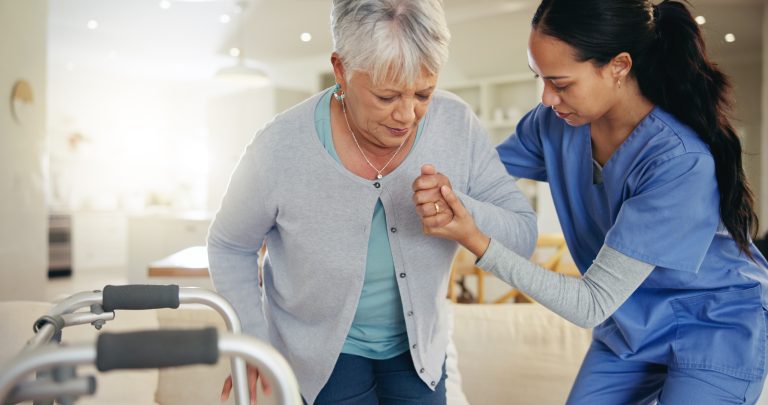
- Teach you how to move safely in everyday life — including how to get up from a chair, navigate steps, or recover if you feel unsteady
- Monitor your progress and adjust your program over time
- Assess your home environment for fall hazards and recommend modifications if needed
Because Bayside Mobile Physio comes to you, there is no need to travel to a clinic. Your physiotherapist works with you in the environment where you actually live — which means any exercise program is practical, relevant, and tailored to your home setup.
Is Physiotherapy for Osteoporosis Covered Under My Aged Care Funding?
If you are receiving services under the Support at Home program, physiotherapy may be funded as part of your care plan. You can request this through your aged care provider or case manager. If you would like help with that conversation, we have written a guide on how to request physiotherapy under the Support at Home program.
Physiotherapy for osteoporosis is also available under the NDIS for eligible participants, and can be accessed privately with a GP referral for a Medicare rebate under a Chronic Disease Management plan.
Get Started With a Home Visit
If you or a loved one has osteoporosis and would like to exercise more safely at home, our team at Bayside Mobile Physio can help. We provide mobile physiotherapy services across Sydney with experience in aged care, falls prevention, and bone health.
Phone: 0468 079 075
Email: [email protected]
Website: www.baysidemobilephysio.com.au

Daniel Chong, BPhty (Australian Catholic University), is an AHPRA-registered physiotherapist and the founder of Bayside Mobile Physio.