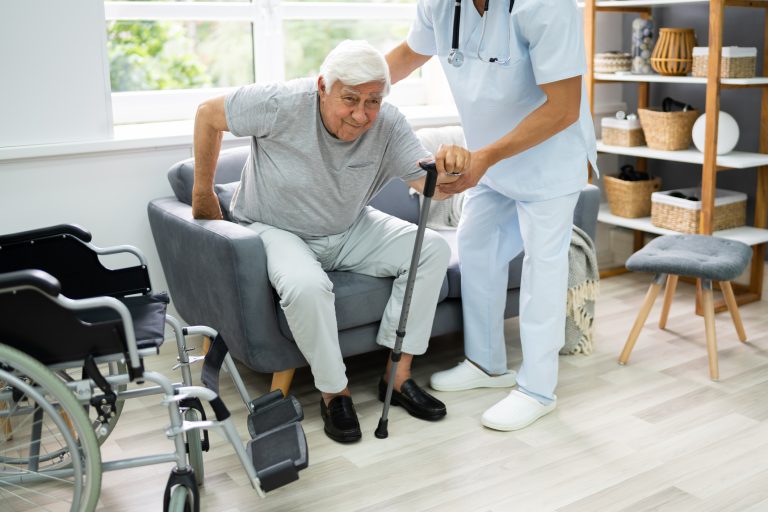

Recovering movement, strength and confidence after a stroke takes consistent, targeted exercise. At Bayside Mobile Physio, we deliver stroke rehabilitation physiotherapy at home across Sydney, so you can practise these exercises in the same environment where you actually live and move, with the same therapist every visit. This guide covers the ten exercises we most commonly …
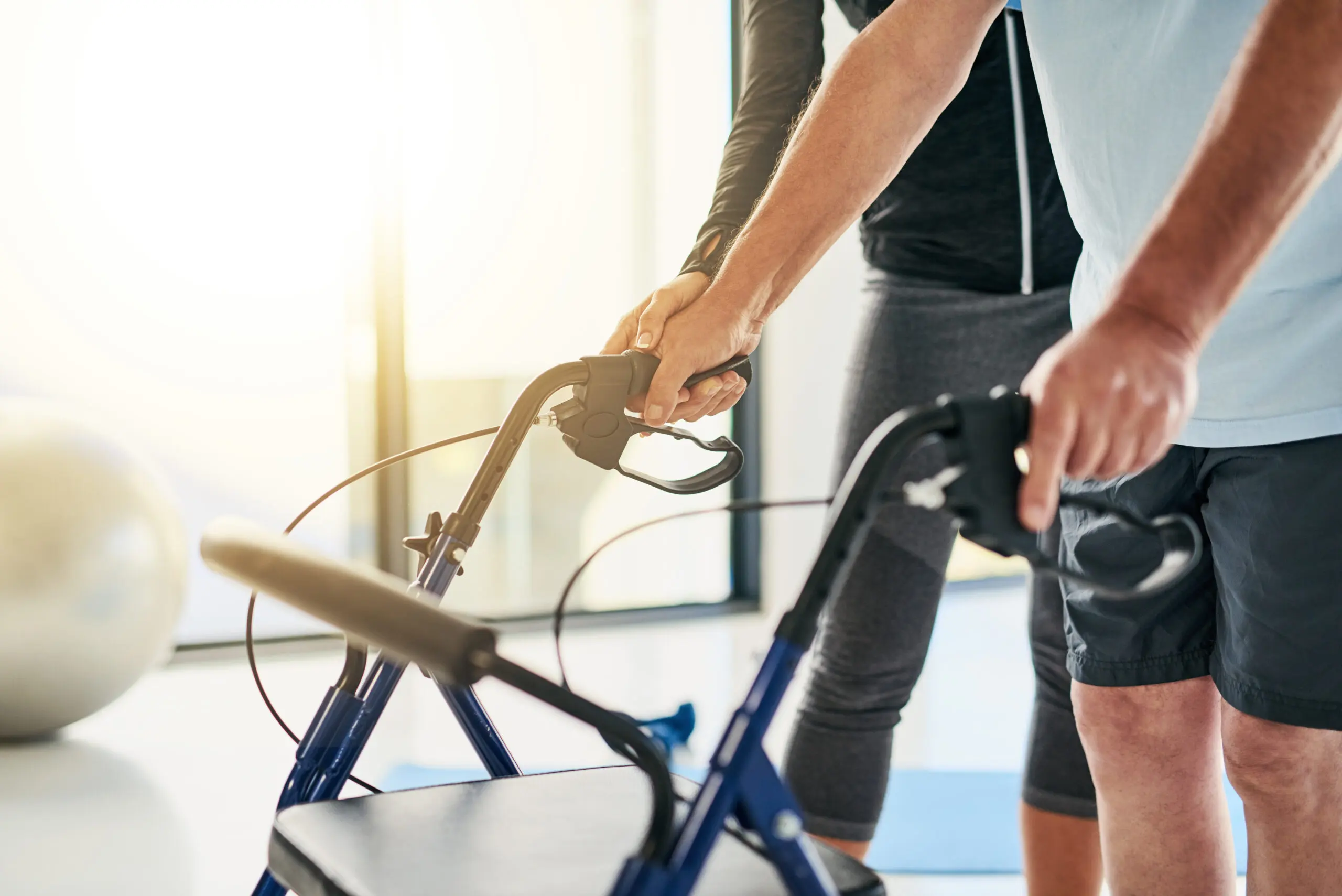
Recovering movement, strength and confidence after a stroke takes consistent, targeted exercise. At Bayside Mobile Physio, we deliver stroke rehabilitation physiotherapy at home across Sydney, so you can practise these exercises in the same environment where you actually live and move, with the same therapist every visit.
This guide covers the ten exercises we most commonly build stroke recovery programs around, how left-side and right-side recovery differ, how often to train, and when it’s safe to start.
Why Exercise Is So Important After a Stroke
A stroke damages part of the brain responsible for controlling movement, but the brain retains the ability to rewire itself around that damage. This is called neuroplasticity, and it’s the reason structured exercise makes such a measurable difference to recovery, as documented by the Stroke Foundation Australia.
Four principles drive that rewiring:
- Repetition. The brain strengthens pathways through repeated practice, not a single attempt.
- Task specificity. Practising the actual movement you want to regain, standing up, walking, reaching, works better than generic exercise.
- Progressive challenge. Exercises need to get harder as function improves, or progress stalls.
- Consistency. Short, regular sessions most days of the week outperform occasional long sessions.
10 Best Exercises for Stroke Recovery
1. Ankle Pumps and Foot Circles
Point the foot down, then pull it back up toward the shin, then circle the ankle in each direction. Improves circulation and is often the first exercise introduced, even from a hospital bed. Aim for 10 to 15 repetitions per direction.
2. Seated Marching
Sitting tall in a stable chair, lift one knee toward the chest and lower it, alternating sides. Targets hip flexor strength and coordination. Aim for 10 to 15 repetitions per leg.
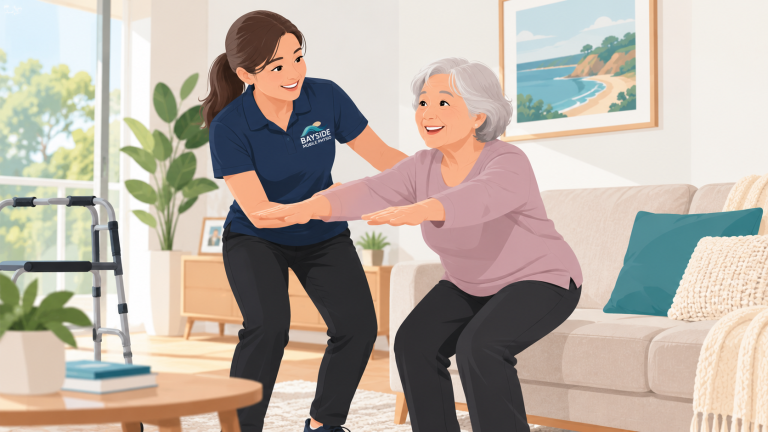
3. Sit to Stand
From a chair with arms if needed, lean forward and stand, then lower back down with control. Builds the leg strength and balance needed for almost every daily transfer. Aim for 5 to 10 repetitions, using a firm chair and supervision if balance is uncertain.
4. Standing Weight Shifts
Standing at a rail or bench, shift weight from one foot to the other and hold briefly on each side. Retrains balance and confidence bearing weight through the affected leg. Aim for 10 repetitions each side.
5. Heel-to-Toe Walking
Walking in a straight line placing the heel of one foot directly in front of the toes of the other. Challenges balance and coordination beyond normal walking. Aim for 10 steps forward, then 10 steps back, near a wall or rail for safety.
6. Arm and Shoulder Exercises
Shoulder rolls, assisted arm raises (using the unaffected arm to support the affected one), and tabletop sliding exercises help maintain shoulder range and begin reactivating the arm.
7. Hand and Finger Exercises
Finger taps, grip and release with a soft ball, and wrist rotations support fine motor recovery for tasks like holding cutlery or buttoning a shirt.
8. Core Strengthening
Seated trunk rotations and pelvic tilts build the core control that underpins balance, walking and safe transfers. Aim for 10 to 15 repetitions.
9. Balance Board and Step Exercises
Once basic balance is established, a balance board or small step introduces controlled instability, progressively challenging balance in a safe, supervised setting.
10. Walking Practice
The primary goal-oriented activity for most people. Walking practice, indoors and eventually outdoors, ties every other exercise together into the function that matters most day to day.
Exercises for Left-Side Stroke Recovery
A stroke affecting the right side of the brain typically weakens the left side of the body (left hemiparesis) and can also affect spatial awareness and attention to the left side of the environment. Programs for left-side stroke recovery usually place extra emphasis on:
- Weight-bearing through the left leg during sit-to-stand and standing weight shifts, to rebuild trust in the affected limb before progressing to walking.
- Left-arm placement cues during seated exercises, since reduced spatial awareness can mean the left arm gets left forgotten at the side of a chair.
- Scanning and awareness drills, such as deliberately turning the head and eyes to the left before reaching or standing, where left-sided neglect is present.
- Mirror therapy, where the unaffected right hand practises a movement in front of a mirror positioned so the reflection appears where the left hand would be. This can help re-engage the affected side even before active movement returns.
Exercises for Right-Side Stroke Recovery
A stroke affecting the left side of the brain typically weakens the right side of the body (right hemiparesis) and, because the left hemisphere usually controls language, can also come with speech or communication difficulty (aphasia). Programs for right-side stroke recovery usually place extra emphasis on:
- Simple, one-step verbal cues paired with demonstration, rather than long instructions, when aphasia is present, so exercises can be followed by watching as well as listening.
- Right hand and fine motor retraining, since the right hand is dominant for most people, with tasks like buttoning a shirt or holding cutlery often driving hand and finger exercises.
- Task-specific practice of the right leg swing phase during heel-to-toe walking, since right-side weakness commonly shows up as a shortened or dragging step on that side.
- Written or picture-based exercise sheets alongside verbal instruction, useful when word-finding is temporarily difficult.
Every stroke is different, and the pattern above is a general guide rather than a fixed rule. A physiotherapy assessment confirms which side is affected, what’s driving each specific difficulty, and which exercises to prioritise first.
How Often Should You Exercise After a Stroke?
Most stroke recovery guidelines recommend exercising at least five days a week. Sessions of 20 to 30 minutes, done consistently, tend to produce more meaningful improvement than longer, occasional sessions. Consistency matters more than intensity, particularly in the early months.
When Should You Start Exercising After a Stroke?
Early mobilisation, getting moving as soon as it’s safely possible, is well supported by clinical evidence and often begins within 24 to 48 hours after a stroke, guided by the treating medical team. Once home, that early momentum needs a structured program to continue building on, rather than stalling.
How a Mobile Physiotherapist Can Help
A physiotherapist visiting at home can assess the actual environment you’re recovering in: the chair you sit in, the stairs you need to climb, the bathroom you need to use safely. That assessment shapes a program built around your real daily challenges, not a generic exercise sheet.
Home visits also remove the burden of travel during a period when transport is often the hardest part of getting to appointments. Bayside Mobile Physio works with NDIS participants (self-managed and plan-managed), Support at Home and Home Care Package clients, DVA cardholders, and private clients across Greater Sydney.
Get Started With Stroke Rehabilitation at Home
If you or someone you’re caring for is recovering from a stroke, we can assess your needs and build a program suited to your home, your goals and your funding arrangement.
Call 0468 079 075 or email [email protected] to arrange an assessment.
Frequently Asked Questions
Can exercise help with stroke-related fatigue?
Yes. Regular, graded exercise tends to reduce fatigue over time, even though it can feel counterintuitive when fatigue is already a problem. A physiotherapist paces the program so exercise builds capacity rather than adding to exhaustion.
Is it too late to start exercising years after a stroke?
No. Neuroplasticity continues well beyond the initial recovery window, and meaningful improvements in strength, balance and function are possible years after a stroke.
What if my affected limb is completely paralysed?
Passive range of motion, mental imagery, and mirror therapy can still be beneficial, even before active movement returns, and can help lay the groundwork for movement to come back.
How do I know which exercises are right for me?
An assessment with a physiotherapist determines your individualised program, based on which side is affected, your current function, and your goals.
What’s the difference between left-side and right-side stroke recovery exercises?
Left-side weakness, from a right-brain stroke, often comes with reduced spatial awareness, so programs add scanning drills and mirror therapy alongside strength work. Right-side weakness, from a left-brain stroke, more often comes with speech or language difficulty, so programs lean on simple demonstration and hand-dominant task practice. Both sides use the same core exercise set, adjusted to the specific challenges present.
Can I do a stroke rehab exercise programme at home without equipment?
Yes. All ten exercises in this guide can be done at home with a stable chair and, later, a rail or wall for support. A mobile physiotherapist can assess your home and recommend any additional equipment, such as a balance board, that will help.
How is a home-based rehab exercise programme different from hospital or clinic-based rehab?
A home-based programme practises the movements you’ll actually use in your own environment: your own stairs, your own bathroom, your own chair, rather than a generic clinic setup. For many people this makes the transfer from exercise to everyday function faster.
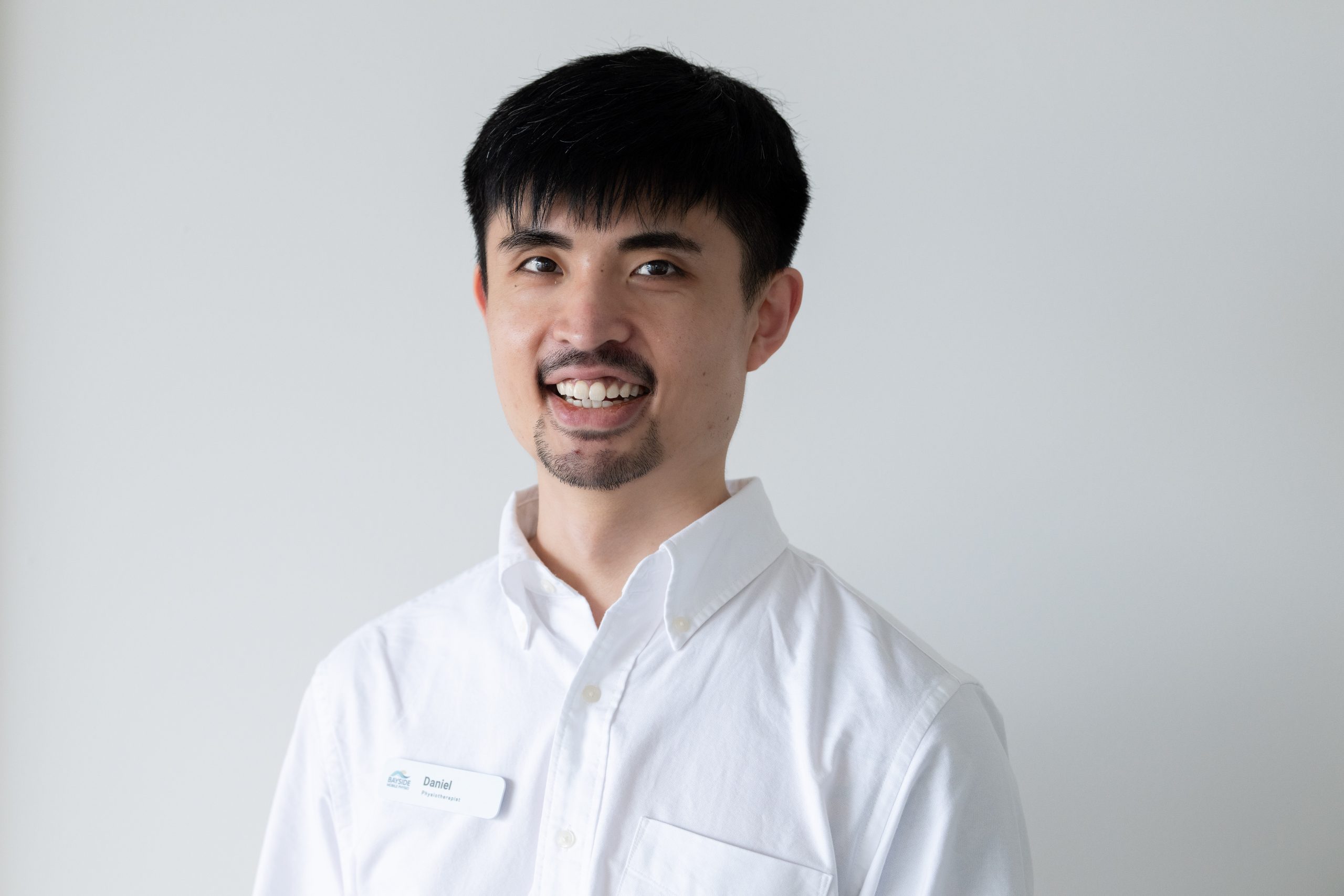
Daniel Chong, BPhty (Australian Catholic University), is an AHPRA-registered physiotherapist and the founder of Bayside Mobile Physio.