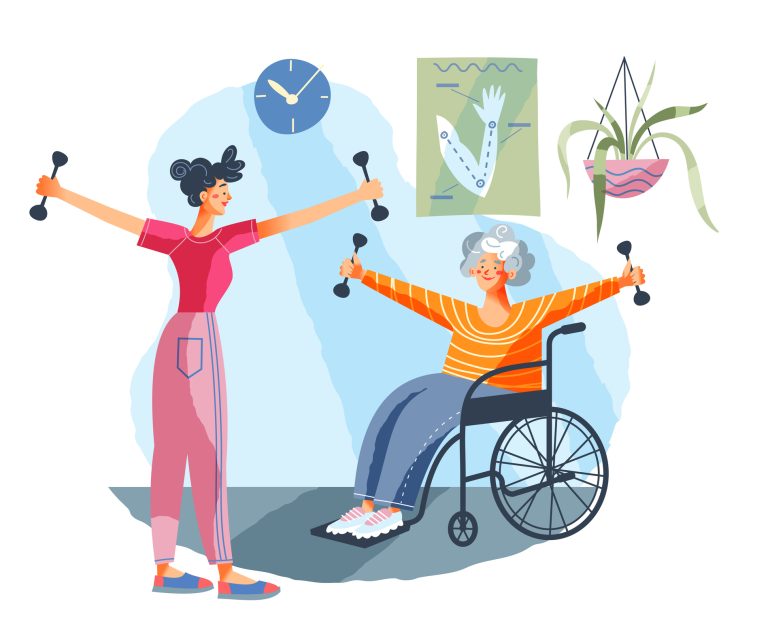

When people think about physiotherapy progress, they often picture the session itself. The hands-on treatment, the exercises done with the therapist, the feedback and adjustments in real time. It feels like that hour is where the work happens.
In reality, that hour is only a small part of the picture.
What the 80/20 Rule Means in Practice
The 80/20 rule is a simple way of describing something most experienced physiotherapists already know. Roughly 20 percent of progress comes from the clinical session itself, while the remaining 80 percent comes from what happens in between sessions: the home exercise program, daily movement habits, and how consistently those routines are followed.
A physiotherapy session is where goals are set, technique is corrected, and progress is measured. But strength, balance, mobility, and function are built gradually, through repetition, in the spaces between visits. For NDIS participants and aged care clients alike, this means the real work often happens at home, not in a clinic or during a scheduled appointment.
Why This Matters for NDIS Participants
For people accessing physiotherapy through NDIS funding, session frequency is often limited by plan budgets. A participant might see their physiotherapist weekly, fortnightly, or even less often depending on their plan and goals.
If progress depended entirely on the session itself, infrequent visits would mean slow or stalled outcomes. But because the majority of progress comes from what happens between sessions, a well-designed home exercise program can keep momentum going even when sessions are spaced further apart.
This is particularly relevant for capacity-building goals under an NDIS plan. Capacity building is about developing skills and independence over time, not just managing symptoms during a session. A home program that the participant can follow consistently, with the right level of support, is often the difference between a plan that achieves its stated goals and one that does not.
What a Good Home Exercise Program Looks Like
Not all home programs are created equal. A program that is too complex, too time-consuming, or unclear is unlikely to be followed consistently, no matter how well designed it is on paper.
The most effective home exercise programs share a few common features. They are realistic for the person’s daily routine, rather than requiring a complete lifestyle overhaul. They use clear instructions, often supported by written notes, diagrams, or video so the exercises can be repeated correctly without supervision. They build gradually, increasing in difficulty as strength and confidence improve, rather than staying static. And they fit around existing supports, so family members, support workers, or carers can help reinforce the program where appropriate.
The Role of Mobile Physiotherapy
This is where mobile physiotherapy has a distinct advantage. When a physiotherapist sees a client in their own home, the home exercise program can be designed around the actual environment the person lives in. Exercises can use the furniture, stairs, and spaces that are already part of daily life, which makes them easier to remember and more likely to become part of a routine rather than a separate task to schedule in.
Seeing the home environment also allows the physiotherapist to identify simple changes that support the home program. A chair at the right height for sit-to-stand practice, a hallway with enough space for a balance exercise, or a step that can be used safely for strength work. These small, practical details often make the difference between a program that gets done and one that gets left in a folder.
Consistency Over Intensity
One of the most common misconceptions is that more intense exercise leads to faster progress. In most cases, consistency matters more than intensity. A short, manageable routine done most days will generally produce better outcomes than an intense session attempted occasionally and then abandoned because it feels too hard or takes too long.
This is especially true for people managing fatigue, pain, cognitive load, or competing daily demands, which describes many NDIS participants and aged care clients. The goal of a home program is not to replicate a gym workout. It is to build small, repeatable habits that compound over weeks and months.
How Progress Is Tracked
Because so much of the work happens outside the session, tracking progress on the home program is just as important as tracking progress in the clinical session. This might include simple logs of what was completed, photos or videos shared between visits, or check-ins with support workers or family members who help with the routine.
This information also feeds into NDIS plan reviews. Being able to show that a participant has consistently engaged with their home program, and the outcomes that have followed, provides clear evidence of progress toward their goals. It supports conversations about whether funding levels and supports remain appropriate, or whether goals need to be adjusted.
Getting the Balance Right
None of this means clinical sessions do not matter. They are where goals are set, technique is taught and corrected, and progress is assessed. Without that foundation, a home program can become ineffective or even counterproductive if exercises are performed incorrectly.
The most effective approach combines both: regular clinical sessions to guide, assess, and adjust, paired with a home program that is realistic, well explained, and genuinely able to be followed day to day. When both pieces are in place, the 80 percent that happens at home has the best chance of actually happening.
Get in Touch
If you are an NDIS participant, family member, or support coordinator looking for a mobile physiotherapy service that builds home exercise programs around real daily routines, get in touch with Bayside Mobile Physio on 0468 079 075 or [email protected].

Daniel Chong, BPhty (Australian Catholic University), is an AHPRA-registered physiotherapist and the founder of Bayside Mobile Physio.