
NDIS neuro physiotherapy for stroke recovery is funded, targeted movement rehabilitation that helps stroke survivors rebuild strength, improve balance and walking, manage stiffness and regain independence. The NDIS can fund it when a stroke has left a permanent and significant disability and physiotherapy is a reasonable and necessary support in the participant's plan. It is …

NDIS neuro physiotherapy for stroke recovery is funded, targeted movement rehabilitation that helps stroke survivors rebuild strength, improve balance and walking, manage stiffness and regain independence. The NDIS can fund it when a stroke has left a permanent and significant disability and physiotherapy is a reasonable and necessary support in the participant’s plan. It is usually funded from the Capacity Building budget, under Improved Daily Living.
Key takeaways
- Who qualifies: new NDIS applicants must be under 65 and have a stroke-related impairment that is likely to be permanent and substantially affects daily life.
- What it covers: assessment, goal-based rehabilitation, strength, balance and walking practice, stiffness management and home programs.
- Where it is funded: usually Capacity Building Supports, Improved Daily Living.
- How it is managed: self-managed, plan-managed or NDIA-managed funding.
- Where it happens: at home, in the real spaces where you need to move.
What is NDIS neuro physiotherapy for stroke recovery?
Neuro physiotherapy (also called neurological physiotherapy) is physiotherapy for conditions that affect the brain and nervous system, including stroke. After a stroke, the messages between the brain and body can be disrupted. This can cause weakness on one side, poor balance, difficulty walking, stiff muscles, reduced arm and hand control, and fatigue.
A neuro physiotherapist assesses how your stroke affects movement and daily tasks, then builds a program around your goals. Goals might include walking safely around your home, getting in and out of a chair or bed, or using your affected arm again. Under the NDIS, this therapy is paid for through your plan when it is a reasonable and necessary support linked to your goals.
How does neuro physiotherapy help after a stroke?
Australian clinical guidelines for stroke management recommend that stroke survivors receive as much rehabilitation practice as possible, focused on the movements they are trying to regain. In practice, neuro physiotherapy usually works on four areas.
1. Task-specific training
This means practising real-life movements such as sitting to standing, stepping, walking and reaching. The brain can reorganise itself after a stroke (neuroplasticity), and repeated, purposeful practice is one of the main ways it relearns movement. The guidelines specifically recommend tailored, repetitive practice of walking for stroke survivors who have difficulty walking.
2. Rebuilding strength
Stroke often leaves an arm or leg weaker. The guidelines recommend progressive resistance training for stroke survivors with reduced strength. Stronger muscles make it easier to stand, climb steps and transfer safely.
3. Balance and coordination
Balance exercises are set at a level that challenges you safely. The guidelines recommend activities that challenge balance for people who have difficulty standing. Better balance lowers the risk of falls and builds confidence in everyday life.
4. Managing stiffness (spasticity)
Tight, stiff muscles are common after a stroke and can be uncomfortable or limit movement. Physiotherapists use a combination of positioning, stretching, movement practice and activity programs. They also work with your GP or specialist when medical options, such as medication, may help.
These are general principles. Your program is tailored to your stroke, your health and your goals.
Who is eligible for NDIS funding after a stroke?
A stroke does not automatically qualify you for the NDIS. Access depends on how the stroke affects your daily life, not the diagnosis alone. To access the NDIS you generally need to:
- Be under 65 when you apply.
- Be an Australian citizen, permanent resident or Protected Special Category visa holder who lives in Australia.
- Have a disability caused by an impairment that is likely to be permanent and substantially affects your ability to do daily activities or take part in social life, work or study. Some people qualify through early intervention if early support is likely to reduce future needs.
You also need evidence, such as assessments and reports from your treating team. A physiotherapy assessment can document how your stroke affects your mobility, strength, balance and daily function.
If you are 65 or older, you cannot make a new NDIS application, but you may be eligible for aged care support. See our guide to Support at Home physiotherapy.
How does NDIS funding for stroke physiotherapy work?
Physiotherapy is generally funded under Capacity Building Supports, in the Improved Daily Living category. You can read more in our article on what NDIS category physiotherapy falls under. Capacity Building funding is set aside for building skills and independence, so it is less flexible than Core Supports. Ask your support coordinator or plan manager how much physiotherapy funding is in your plan.
Your NDIS funding is managed in one of three ways:
| Funding management | Who pays providers | Can Bayside Mobile Physio work with it? |
|---|---|---|
| Self-managed | You or your nominee pay providers directly | Yes |
| Plan-managed | Your plan manager pays our invoices | Yes |
| NDIA-managed | The NDIA pays registered providers directly | No, we are not a registered NDIS provider |
Plans can use different management types for different budgets, and you can ask the NDIA to change how your plan is managed.
What happens at your first neuro physiotherapy session?
- Assessment: your physiotherapist checks movement, strength, balance, walking, arm and hand function, falls risk and your home environment.
- Goal setting: together you set practical goals, such as walking to the letterbox or getting off the toilet independently.
- Program: you receive targeted exercises and a home program, and family or carers can be shown how to help safely.
- Equipment advice: your physiotherapist can advise on walking aids, wheelchairs and home equipment, and can work alongside an occupational therapist where needed. Not sure who does what? See NDIS physiotherapy vs occupational therapy.
- Reporting: progress reports link your therapy to your goals and support your NDIS plan review.
In-home or clinic: where is stroke physiotherapy best delivered?
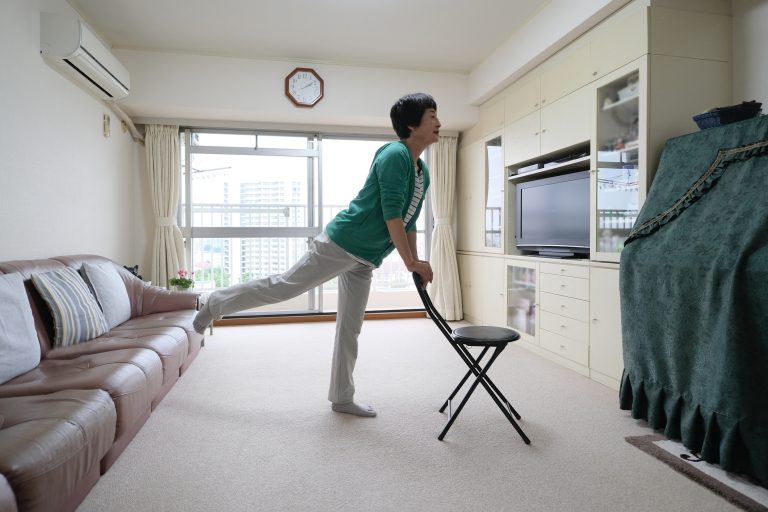
Both can work well. In-home physiotherapy lets you practise in the places you actually need to move, such as your bed, bathroom, kitchen and steps. It also lets your physiotherapist spot hazards and adjust your environment, saves travel when you are fatigued, and lets carers take part. Clinics can offer specialised equipment such as treadmills.
Bayside Mobile Physio provides in-home stroke rehabilitation physiotherapy and NDIS physiotherapy across Greater Sydney.
What if my NDIS plan is not approved yet?
You can still see a physiotherapist while you wait. A functional capacity assessment documents how your stroke affects daily living and can provide evidence for an access request or plan review. Once your plan is approved, confirm your physiotherapy funding, how your plan is managed and your start date with your support coordinator or plan manager.
How often and for how long should you have physiotherapy after a stroke?
The guidelines emphasise that more practice is better, within what is safe for you. How often you have sessions depends on your goals, energy levels, funding and medical advice. Many people combine therapist-led sessions with a daily home exercise program. Read our guide to the best exercises for stroke recovery for ideas to discuss with your physiotherapist.
Frequently asked questions
Does the NDIS cover physiotherapy after a stroke?
Yes, if you are an NDIS participant and physiotherapy is a reasonable and necessary support linked to your goals. It is usually funded under Capacity Building Supports, Improved Daily Living.
Is there an age limit for NDIS access after a stroke?
New NDIS applicants must be under 65 on the day they apply. If you are 65 or older, aged care supports such as Support at Home may be available instead.
Can I use a plan manager for stroke physiotherapy?
Yes. Bayside Mobile Physio works with self-managed and plan-managed participants. NDIA-managed funding generally requires a registered provider.
Can physiotherapy improve arm and hand movement after a stroke?
It can help. The guidelines recommend intensive task practice for people who have some active wrist and finger movement, including approaches such as constraint-induced movement therapy for suitable people. Your physiotherapist will assess whether it is right for you.
How soon after a stroke can I start physiotherapy?
Rehabilitation usually begins in hospital as soon as you are medically stable. Community and NDIS-funded physiotherapy typically continues after discharge. Always follow your medical team’s advice about timing and intensity.
Do you provide neuro physiotherapy at home in Sydney?
Yes. We travel to your home across Greater Sydney, so you can practise in your own environment.
Book stroke physiotherapy at home
To talk about NDIS neuro physiotherapy for stroke recovery, call 0468 079 075 or email [email protected]. You can also book online. Support coordinators, plan managers and other referrers can use our referral page.
Sources
- NDIS: Am I eligible?
- NDIS: Managing your plan
- Stroke Foundation: Clinical Guidelines for Stroke Management, physiotherapy summary (June 2025)
This article is general information, not medical advice. Speak to your GP, specialist or physiotherapist about your own situation.

Daniel Chong, BPhty (Australian Catholic University), is an AHPRA-registered physiotherapist and the founder of Bayside Mobile Physio.