
Falls are one of the most common — and most preventable — health risks facing older Australians. In 2023–24 alone, falls led to 248,000 injury-related hospitalisations and cost the health system more than $5 billion. One in three people over 65 will fall at least once this year, and half of those falls happen at …
Falls are one of the most common — and most preventable — health risks facing older Australians. In 2023–24 alone, falls led to 248,000 injury-related hospitalisations and cost the health system more than $5 billion. One in three people over 65 will fall at least once this year, and half of those falls happen at home, in the rooms and routines people know best.
The good news is that falls are not simply a consequence of getting older. Research consistently shows that targeted balance and functional exercise is the single most effective intervention available for reducing fall risk, across nearly every condition and age group. For families supporting an ageing parent, or for NDIS participants managing a disability that affects balance, this is where physiotherapy makes the most measurable difference.
Why Falls Happen More Often as We Age
Balance relies on a constant conversation between the eyes, the inner ear, the muscles, and the brain. As we age, or as a result of conditions like stroke, Parkinson’s, or reduced mobility after a hospital stay, that conversation can slow down or drop signals altogether. Add in reduced muscle strength, medication side effects, or simply less confidence moving around the home, and the risk compounds quickly.
Australians aged 65 and over are 12 times more likely to be hospitalised from a fall than those aged 25–44, according to the Australian Physiotherapy Association. It’s a stark number, but it also points to where the opportunity lies: strength and balance are trainable at any age, and the right exercise program can meaningfully change that risk profile.
What the Evidence Says About Exercise and Falls
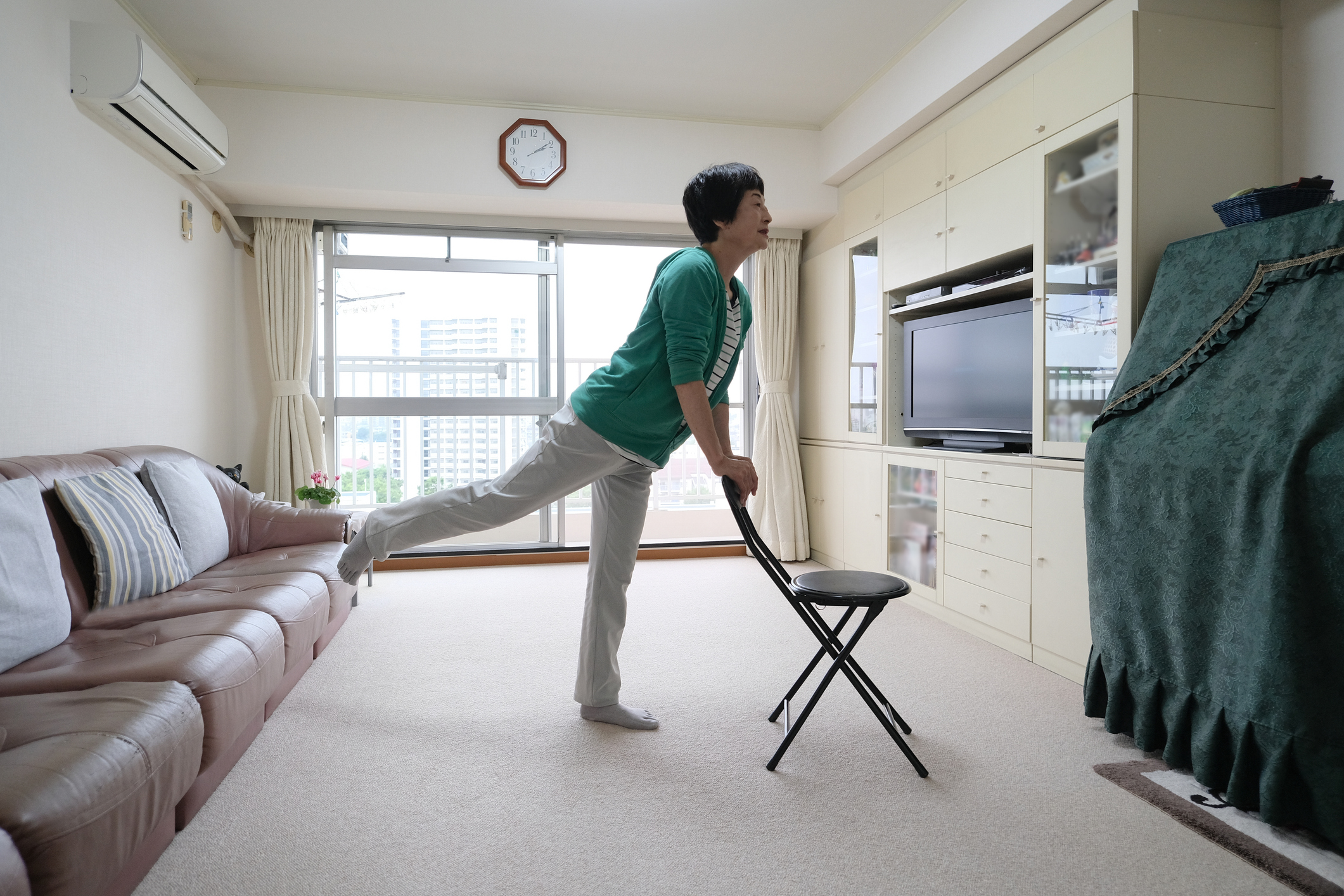
Balance and functional training has been shown to reduce falls by close to 25% in community-dwelling adults aged 60 and over. The exercises that work best are the ones that genuinely challenge balance — standing with feet closer together, shifting weight, or practising controlled movement with minimal hand support — rather than general walking or strength work alone, which offer other health benefits but don’t move the needle on fall risk by themselves.
Programs like the Otago Programme, a home-based balance and strength routine with strong supporting evidence, and Tai Chi-based approaches are widely recommended for this reason. NSW Health best-practice guidelines suggest at least two hours of this kind of exercise per week, sustained for six months or more, with programs that accumulate over 50 hours in total showing the greatest benefit. That’s a real commitment, but it’s also achievable in short, regular sessions rather than one long workout — two one-hour sessions a week, or several shorter ones, both work.
The key is that the program needs to be challenging enough to matter clinically, while still being safe — which is exactly the balance a physiotherapist is trained to strike and adjust as progress is made.
How a Mobile Physiotherapist Helps
For older clients and NDIS participants, doing this safely and consistently at home is often the hardest part — not the exercises themselves, but having someone assess what’s actually driving the fall risk, set a program at the right level of challenge, and adjust it as strength and confidence improve.
A home visit from a Bayside physiotherapist typically includes:
- A falls risk assessment covering strength, balance, gait, vision, footwear, and home hazards
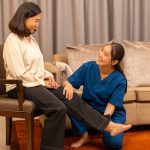
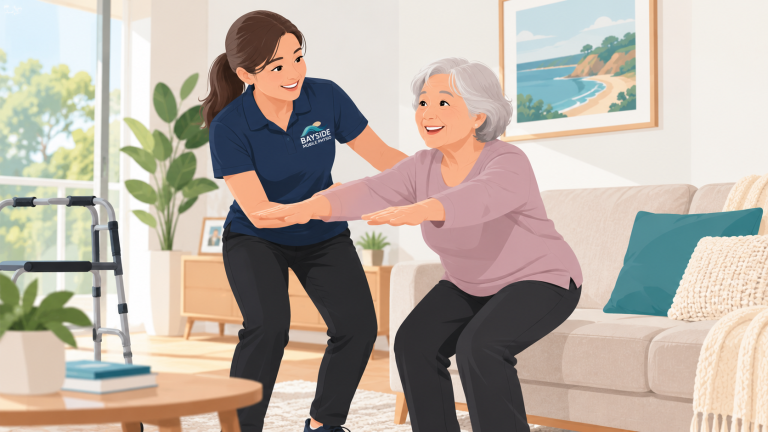
- A personalised balance and strength program, delivered and progressed in the home environment where the client actually needs to feel steady
- Practical home safety recommendations — lighting, rails, rug placement, clear walkways
- Clear documentation and reporting back to family, support coordinators, or care managers so everyone involved can see progress
Because sessions happen in the client’s own home, the program is grounded in their real environment from day one — the same stairs, the same bathroom, the same kitchen — rather than a clinic setting that doesn’t reflect daily life.
Getting Started
If you’re supporting a family member who’s had a recent fall, seems less steady than they used to be, or is returning home after a hospital stay, an assessment is the natural first step. For NDIS participants, fall prevention and balance work is a common and well-supported inclusion in a therapy plan; for Support at Home clients, it fits naturally alongside a broader home care and reablement goal.
Bayside Mobile Physio provides assessments and ongoing balance programs in the client’s own home across Greater Sydney, for NDIS, Support at Home, DVA, and private clients — with no travel fees for NDIS clients.

Daniel Chong, BPhty (Australian Catholic University), is an AHPRA-registered physiotherapist and the founder of Bayside Mobile Physio.