
For many older Australians, maintaining independence at home becomes increasingly important with age. Everyday activities such as getting out of bed, walking to the bathroom, climbing steps or preparing a meal can become more challenging when strength, balance or mobility declines. Physiotherapy can help address these difficulties, but attending a clinic isn't always practical. Transport …
For many older Australians, maintaining independence at home becomes increasingly important with age. Everyday activities such as getting out of bed, walking to the bathroom, climbing steps or preparing a meal can become more challenging when strength, balance or mobility declines.
Physiotherapy can help address these difficulties, but attending a clinic isn’t always practical. Transport arrangements, fatigue, mobility limitations and reliance on family members can make regular appointments difficult.
If you’re unsure whether an older family member could benefit from physiotherapy, our guide to 7 signs your elderly parent may need a physiotherapist at home explains some common changes to look out for.
Home visit physiotherapy offers an alternative by bringing professional assessment and treatment directly into a person’s living environment.
Here are seven practical benefits of receiving physiotherapy at home, particularly for older adults who want to remain active, safe and independent.
1. Physiotherapy Is Based on Your Actual Home Environment
One of the most valuable advantages of home visit physiotherapy is the opportunity to assess movement where everyday activities take place.
Walking confidently along a clinic corridor doesn’t necessarily mean someone can safely navigate their own home.
For example, an older person may manage walking on a flat surface but struggle with:
- Getting out of a low lounge chair
- Walking through narrow hallways
- Negotiating steps at the front entrance
- Getting in and out of bed
- Moving safely between rooms with a walking aid
During a home visit, a physiotherapist can observe these challenges directly and develop strategies that reflect the person’s actual living conditions.
This makes rehabilitation more relevant to the movements and activities that matter in everyday life.
For more information about the assessment and treatment process, see our guide on what to expect from your first home physiotherapy appointment.
2. Less Physical Stress From Travelling to Appointments
For older adults experiencing pain, fatigue or reduced mobility, travelling to a physiotherapy clinic can be physically demanding.
A simple appointment may involve organising transport, walking to a vehicle, transferring in and out of a car and navigating unfamiliar environments.
For some people, these activities can use considerable energy before treatment even begins.
Home visit physiotherapy removes the need to travel, allowing clients to receive treatment in familiar surroundings.
This can be particularly beneficial for people who:
- Require assistance leaving their home
- Use walkers or wheelchairs
- Experience fatigue associated with chronic health conditions
- Have difficulty accessing public transport
- Rely on family members or carers for transport
Reducing these practical barriers can make attending planned physiotherapy appointments more manageable.
3. Rehabilitation Can Focus on Meaningful Daily Activities
For many older adults, the most important rehabilitation goals aren’t about achieving a particular exercise score.
They’re about maintaining the ability to do everyday things independently.
Someone might want to walk to their letterbox, stand up from their favourite chair without assistance or move around the kitchen more confidently.
Home-based physiotherapy allows treatment to incorporate these activities directly.
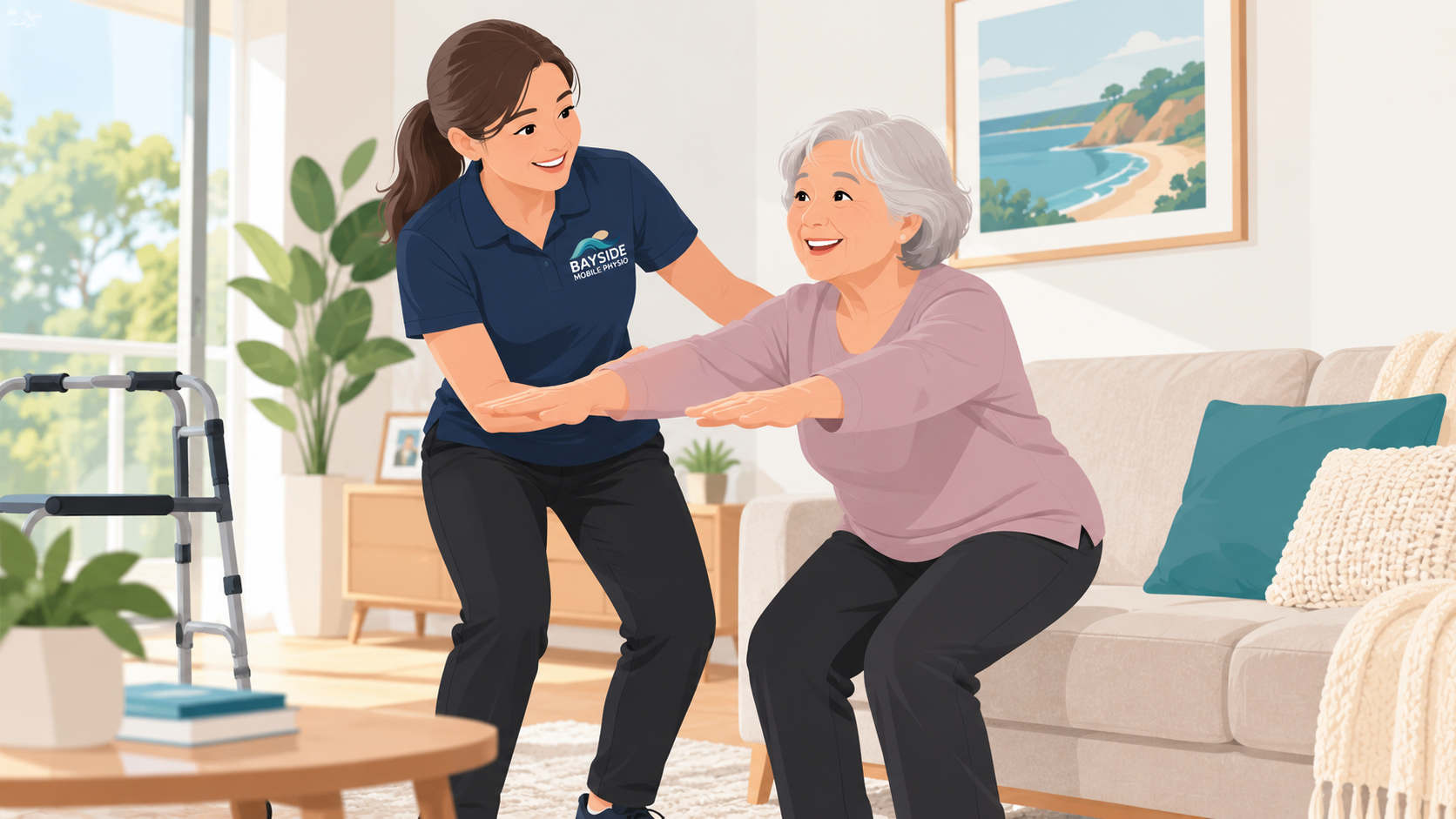
For example, a physiotherapist may practise standing from the client’s usual dining chair rather than a standard clinic treatment bench.
Exercises can also be adapted to the space and equipment available in the home.
The aim is to make improvements in strength and mobility translate into meaningful everyday function.
4. Family Members and Carers Can Be Involved
Family members and carers often play an important role in helping older adults remain independent.
However, they may be unsure how much assistance to provide or how to encourage movement safely.
A home physiotherapy appointment creates opportunities for carers to receive practical guidance when appropriate and with the client’s consent.
This may include:
- Encouraging safe participation in prescribed exercises
- Understanding when assistance is needed during transfers
- Supporting appropriate use of walking aids
- Recognising changes in mobility that should be reported
- Helping establish a manageable exercise routine
For example, a family member caring for someone who has recently become less mobile may benefit from learning how to provide appropriate supervision without unnecessarily taking over activities the person can still perform independently.
Where more complex equipment or transfer techniques are required, the physiotherapist can recommend further assessment or training.
5. Exercises Can Be Adapted to Available Space and Equipment
One common challenge with rehabilitation is maintaining an exercise routine between appointments.
An exercise program may be clinically appropriate, but it also needs to be practical.
A home visit allows the physiotherapist to identify suitable areas for exercise and adapt the program to the client’s environment.
Depending on the person’s abilities, treatment might incorporate:
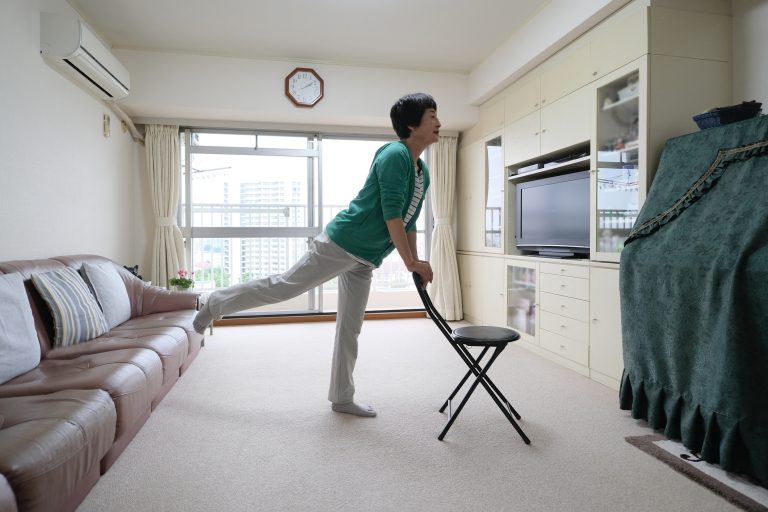
- Sit-to-stand exercises using a suitable stable chair
- Supported standing exercises near a secure surface
- Walking practice along an appropriate indoor route
- Strengthening exercises using resistance bands
- Bed-based exercises for clients with significant mobility limitations
The physiotherapist can demonstrate the exercises in the intended location and check that the person can perform them safely.
This can help make the home exercise program easier to understand and incorporate into a regular routine.
For additional information about physical activity and healthy ageing, Healthdirect Australia provides trusted Australian health information and resources.
6. Changes in Mobility Can Be Identified in Everyday Context
Mobility can change gradually, particularly for older adults living with multiple health conditions.
A person who previously walked independently may begin relying more heavily on furniture for support, taking longer to stand or avoiding certain areas of the home.
These changes may not always be obvious during a short clinic appointment.
When physiotherapy takes place at home, the clinician can assess functional activities in context and compare them with the person’s previous abilities.
Changes that may warrant further assessment include:
- Increasing difficulty standing from chairs
- Reduced walking distance
- Greater reliance on a walking aid
- New difficulties with transfers
- Increased fatigue during routine activities
- Reduced confidence moving around the home
Identifying these changes can help guide appropriate rehabilitation, equipment recommendations or referral to other healthcare professionals.
New or rapidly worsening symptoms should also be assessed medically rather than assumed to be a normal part of ageing.
7. Physiotherapy Can Support Independence and Confidence at Home
For many older adults, remaining at home is closely connected to their sense of independence and quality of life.
When mobility becomes more difficult, people may gradually reduce their activities because they are worried about pain, fatigue or falling.
This reduction in activity can contribute to further physical deconditioning.
An individualised physiotherapy program can help address modifiable factors such as muscle weakness, reduced endurance and movement difficulties.
The Australian Government’s physical activity guidance highlights the importance of regular movement for health and wellbeing, including activities that support strength and balance.
Depending on the person’s health and goals, treatment may focus on improving walking capacity, practising everyday movements and building confidence through appropriately graded activity.
Progress may be gradual, and not every condition will improve in the same way.
For some people, the goal may be regaining a previous level of independence. For others, it may be maintaining current mobility or making daily activities safer and more manageable.
Is Home Visit Physiotherapy Suitable for Every Older Adult?
Home-based physiotherapy can be particularly useful when travelling to a clinic is difficult or when rehabilitation goals relate closely to activities within the home.
However, it isn’t necessarily the best setting for every person.
Some clients may benefit from specialised rehabilitation equipment, supervised gym-based strengthening or facilities that are more readily available in a clinic.
The most appropriate setting depends on the person’s clinical needs, functional goals, preferences and available support.
A physiotherapist can help determine whether home-based treatment is suitable or whether another rehabilitation setting would better meet their needs.
Home Visit Physiotherapy Across Sydney
At Bayside Mobile Physio, we provide personalised home visit physiotherapy across Sydney for older adults experiencing mobility difficulties, reduced strength and challenges with everyday activities.
Our AHPRA-registered physiotherapists assist with functional rehabilitation, mobility and balance training, strengthening and maintaining independence at home.
We support older adults receiving aged care services, including those accessing physiotherapy through the Support at Home program, as well as private clients and people accessing other eligible funding arrangements.
Our physiotherapists focus on practical, individualised treatment that reflects each client’s abilities, home environment and personal goals.
Arrange a Home Physiotherapy Appointment
Looking for physiotherapy at home for yourself, a family member or someone you support?
Our team can discuss your needs, confirm service availability and help arrange an appropriate home visit.
Phone: 0468 079 075
Email: [email protected]
Make a Physiotherapy Referral →

Daniel Chong, BPhty (Australian Catholic University), is an AHPRA-registered physiotherapist and the founder of Bayside Mobile Physio.