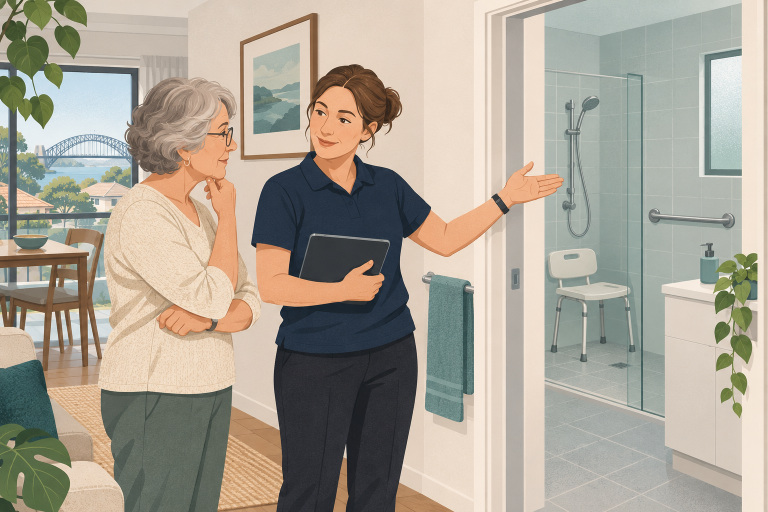

A client is finding it harder to get out of their favourite chair. Another has stopped showering unless a family member is home. A support worker notices someone holding onto furniture to reach the bathroom. These changes can be signs that a Support at Home occupational therapy assessment would be useful. For care partners and …

These changes can be signs that a Support at Home occupational therapy assessment would be useful.
For care partners and care managers, recognising these changes creates an opportunity to review how a person manages everyday activities—and what could help them remain safer and more independent.
At Bayside Mobile Physio, our home visit occupational therapy service in Sydney helps older adults address difficulties with daily activities, equipment and their home environment.
How does Support at Home occupational therapy help?
Occupational therapists help people participate in the activities that matter to them. For older adults, this may include showering, dressing, preparing meals, using the toilet, getting in and out of bed, and accessing their home.
A home visit allows the OT to assess these activities in the environment where the difficulties occur. They can consider the person’s abilities, preferences, existing support and home layout together.
Occupational therapy is included in the Support at Home program, subject to the participant’s assessed needs and approved services.
Seven signs your client may benefit from an OT referral
1. Showering, dressing or toileting is becoming harder
Consider a referral when a client:
- Struggles to step into the shower or get on and off the toilet.
- Holds onto towel rails, taps or furniture for support.
- Needs more assistance with washing or dressing.
- Avoids showering because they feel unsafe.
An OT can assess the task and discuss suitable strategies, equipment or home modifications. Recommendations should reflect the person’s needs and how they want to manage their daily routine.
2. Getting out of a chair or bed requires more help
A client may start needing repeated attempts to stand, rely on someone pulling them up, or have difficulty getting their legs into bed.
An OT can assess how the person manages these transfers and whether the height, positioning or suitability of their furniture is contributing to the difficulty. Where appropriate, they may recommend equipment, changes to the setup or further assessment.
3. There have been falls, near misses or reduced confidence at home
A fall is one reason to review a client’s home environment. Near misses and changes in behaviour also matter.
For example, a client may stop using the bathroom at night, avoid their front steps or rely increasingly on furniture for support.
An OT can consider how the home layout and everyday tasks contribute to difficulty. Support at Home physiotherapy may also be appropriate where balance, strength or mobility needs assessment. The services can work together when both are relevant.
4. Existing equipment no longer meets the client’s needs
Having equipment in the home does not necessarily mean it remains suitable.
A referral may be useful when:
- A shower chair no longer feels stable or comfortable.
- A client’s abilities have changed since equipment was supplied.
- Equipment is unused because the client finds it difficult to manage.
- Family members are considering buying equipment but are unsure what to choose.
An OT can review existing equipment and assess whether adjustments, alternatives or trials are needed.
5. Everyday tasks are being abandoned
Sometimes the clearest sign is what a client has stopped doing.
They may no longer prepare meals, struggle to organise clothing, or avoid activities they previously enjoyed because they feel too difficult or tiring.
An OT can explore what is getting in the way and recommend practical changes to the task, routine or environment. The client’s own priorities should guide the assessment.
6. Family members or support workers are providing increasing physical assistance
Comments such as “I have to lift her out of the chair now” or “We’re finding showering much harder” warrant a review.
Include these concerns in the referral so the OT understands which tasks have changed, who provides assistance and what difficulties they are experiencing.
An assessment can help clarify whether equipment, a different approach or additional support is needed.
7. The client’s function has changed after a hospital stay or illness
A person may return home with different abilities from before their admission. Their bathroom, bed or usual chair may now be difficult to use, even if the setup previously worked well.
An OT review can help identify practical barriers to resuming daily activities. Include any discharge recommendations and equipment already supplied so the assessment builds on existing care.
How do equipment and home modifications fit into Support at Home?
The Assistive Technology and Home Modifications (AT-HM) scheme provides a separate funding pathway for approved equipment and home modifications.
Access depends on assessed needs, approvals and funding allocation. An OT recommendation does not itself guarantee funding.
Before arranging assessments, equipment trials or reports, confirm the participant’s approved supports and the applicable funding pathway with their provider.
What should you include in a Support at Home OT referral?
A clear referral helps the therapist plan an assessment around the client’s needs. Include:
- The main concern: which activities have become difficult or unsafe.
- What has changed: recent falls, hospital admissions or increased assistance.
- The client’s goals: what they want to do more easily or independently.
- Relevant background: health conditions, current equipment and existing supports.
- Practical details: address, contact person, access requirements and consent.
- Funding and reporting requirements: confirmed approvals, quote requirements and any requested report.
You do not need to identify the exact equipment or solution before referring. Describe the problem and what the client wants to achieve.
Care partners and providers can use our online client referral form and specify occupational therapy as the requested service.
Arrange Support at Home occupational therapy in Sydney
If your client is finding daily activities harder, needs an equipment review or is having difficulty accessing areas of their home, an occupational therapy assessment may help identify the next steps.
Bayside Mobile Physio provides home visit occupational therapy across selected Sydney service areas, working with older adults, families and care partners to support everyday function and independence.
Contact our team to confirm coverage in your client’s suburb, assessment requirements, fees and clinician availability.
Prefer to discuss the referral first?
Call 0468 079 075
or contact our team.