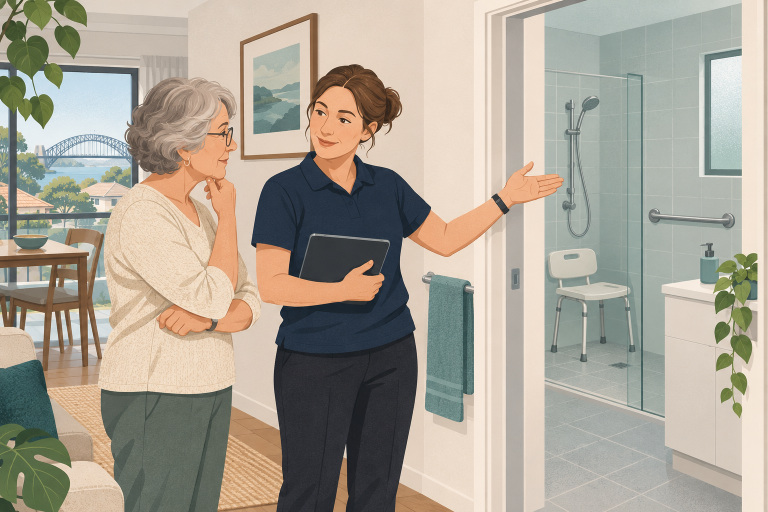

If you or a loved one has an NDIS plan, you may be entitled to physiotherapy support — including physiotherapy delivered in your own home. Yet many NDIS participants and their families are unsure how to access this support, what it covers, or how to find a mobile physiotherapy provider in Sydney.
This guide explains everything you need to know about using your NDIS plan to access in-home physiotherapy, including which support categories cover physiotherapy, how to find a provider, and what to expect from your first visit.
Does the NDIS Fund Physiotherapy?
Yes — the NDIS funds physiotherapy under several support categories depending on your individual plan and goals. Physiotherapy can be included in your plan as either a capacity building support or a daily living support, depending on how it relates to your specific goals and functional needs.
The most common support categories that cover physiotherapy include:
- Capacity Building — Improved Daily Living (CB Daily Activity) — the most common category for physiotherapy, covering assessments, therapy, and exercise programs aimed at building skills and independence
- Capacity Building — Improved Health and Wellbeing — may cover exercise programs and physiotherapy for health maintenance
- Core Supports — Assistance with Daily Life — in some cases physiotherapy may be funded under core supports
If you’re unsure which category applies to your plan, your support coordinator or plan manager can help you identify the right funding.
Who Can Access NDIS Physiotherapy?
NDIS physiotherapy is available to participants whose plan includes relevant supports. You may be able to access physiotherapy if your goals include:
- Improving mobility, strength or balance
- Reducing falls risk
- Building independence in daily activities
- Recovering function following illness or injury
- Managing a neurological condition such as cerebral palsy, stroke, or multiple sclerosis
- Building capacity for greater community participation
Your physiotherapy goals should be clearly documented in your NDIS plan. If physiotherapy is not currently included in your plan, speak with your support coordinator about including it at your next plan review.
Plan Managed vs Self Managed — What’s the Difference?
How you access physiotherapy depends on how your NDIS plan is managed:
Plan Managed: Your plan manager handles the financial side of your supports. You can use any physiotherapy provider — registered or unregistered — and your plan manager pays the invoice directly from your NDIS funding. This is the most common arrangement and the simplest for participants.
Self Managed: You manage your own funding and pay providers directly, then claim reimbursement from the NDIS. Self-managed participants can generally choose a registered or unregistered physiotherapy provider.
Agency Managed (NDIA Managed): Your funding is managed directly by the NDIA and you can only use NDIS registered providers. If your plan is agency managed, make sure your physiotherapy provider is NDIS registered before booking.
At Bayside Mobile Physio we work with plan managed and self managed participants across Greater Sydney. We’re not a registered NDIS provider, so we can’t accept agency managed participants.
How to Find the Right NDIS Physiotherapist: 5 Questions to Ask
Start with one activity you want to manage more easily. Then compare physiotherapists on their experience with that activity, what they would assess at home, how they would track progress and what they charge. These five questions can help you decide who to contact.
1. Can you work with the way my physiotherapy funding is managed?
Check how the funding you intend to use is managed. For NDIA-managed funding, use a registered NDIS provider. If your funding is plan-managed or self-managed, you can generally choose a registered or unregistered physiotherapy provider. Ask your support coordinator for suggestions or use the NDIS Provider Finder to look up registered providers. Ask who would treat you and check their individual physiotherapy registration on the Ahpra register.
2. Have you helped adults with needs and goals like mine?
Describe the activity you want to work on, the help you currently need and any mobility aid you use. Ask how the physiotherapist would approach it. For example, “I want to get from the front door to the car with less help. What would you assess first?” A useful answer might mention the steps, walking surface, mobility aid and assistance you currently need.
3. What will you assess during the first home visit?
Ask whether the physiotherapist can observe the activity where it actually happens and explain what they would need to see. Tell them about access barriers, communication preferences and whether you’d like a family member or support worker present.
4. How will we know whether physiotherapy is helping?
Ask what they would document at the first visit and when you would review it together. For the front-door-to-car goal, you might track how much assistance you need along the same route. If a progress summary or plan review report is needed, ask what it would cover and agree on timing.
5. What costs should I confirm before booking?
Ask for the appointment length and fees in writing. Check whether travel, reports or late cancellations are charged separately, and confirm how invoices will be handled. Review the service agreement before committing to ongoing visits.
Once you’ve chosen a provider, confirm the relevant funding and billing details before booking. If someone is arranging care on your behalf, they can use our NDIS physiotherapy referral guide.
What Does NDIS Physiotherapy at Home Actually Look Like?
Many NDIS participants and families wonder what an in-home physiotherapy visit involves. Here’s what to expect:
Initial Assessment: Your first session is typically an assessment where your physiotherapist will:
- Review your medical history and NDIS goals
- Assess your strength, balance, mobility and functional capacity
- Identify areas for improvement
- Discuss your goals and priorities
- Design a personalised physiotherapy program
Ongoing Sessions: Follow-up sessions involve hands-on treatment, exercise instruction, and progress monitoring. Your physiotherapist will come to your home at a scheduled time — no travel required on your end.
Reporting: Your physiotherapist will provide progress notes and reports aligned with your NDIS plan outcomes. These are important for your plan reviews and for demonstrating the impact of your supports.
How Much Does NDIS Physiotherapy Cost?
The NDIA publishes maximum prices for applicable plan-managed and NDIA-managed supports. Self-managed participants can agree on fees directly with their provider. See the current NDIS pricing arrangements.
Bayside confirms the applicable fees and billing arrangements before booking. For plan-managed supports, we invoice the nominated plan manager for agreed services. Check that the support can be claimed and that enough funding is available before proceeding. See our NDIS physiotherapy fees guide for current price limits.
How Bayside Mobile Physio Can Help
At Bayside Mobile Physio, we provide in-home physiotherapy for NDIS participants across Western Sydney, the Inner West, South Sydney, and surrounding areas. Our AHPRA-registered physiotherapists visit participants at home, in group homes, SIL properties, and supported accommodation — making quality physiotherapy accessible without the need to travel.
We work with plan managed and self managed participants. We book first appointments once a signed NDIS service agreement is in place, and timing depends on your location and clinician availability.
Getting started is simple — submit a referral online, contact us directly, or ask your support coordinator to reach out on your behalf.
Frequently Asked Questions
Can I use my NDIS funding for physiotherapy without a referral? Yes — for plan managed and self managed participants, no GP referral is required. You or your support coordinator can contact us directly to arrange an assessment.
Does my physiotherapist need to be NDIS registered? Only if your plan is agency managed. Plan managed and self managed participants can use any physiotherapy provider regardless of registration status.
How many physiotherapy sessions does the NDIS cover? There is no fixed number of sessions — it depends on your individual plan budget and goals. Your support coordinator or plan manager can advise how many sessions your funding will cover.
What areas do you cover? We service NDIS participants across Greater Sydney including Western Sydney, Inner West, South Sydney, Parramatta, Blacktown, Penrith, Campbelltown, Liverpool, Ashfield, and surrounding suburbs.
How do I get started? Simply contact us directly or ask your support coordinator to submit a referral. We’ll be in touch to confirm availability and send our NDIS service agreement for signing before booking your first visit.
If you’re an adult with self-managed or plan-managed NDIS funding in Greater Sydney, check home-visit availability in your suburb.